
 EN
EN
Water accumulation in bathrooms, showers, and commercial spaces poses serious risks to structural integrity, hygiene, and safety. A high-performance floor drain represents one of the most effective solutions to this persistent problem. Understanding how a floor drain functions and why high-flow designs matter is essential for property managers, facility directors, and homeowners seeking to maintain dry, safe environments. The mechanism behind effective water management relies on strategic design, material selection, and proper installation techniques that work together seamlessly.
When water pools on bathroom or shower floors, it creates conditions favorable for mold growth, bacterial contamination, and slip hazards. A properly designed floor drain addresses these challenges by providing rapid water removal, preventing stagnation, and maintaining hygiene standards. The efficiency of any floor drain depends on its capacity to handle incoming water volume while maintaining adequate airflow and preventing blockages. High-flow floor drain systems incorporate engineering principles that maximize drainage speed while minimizing maintenance requirements and odor issues.
Core Mechanisms Behind Floor Drain Efficiency
Understanding Water Flow Dynamics in Floor Drains
A floor drain operates on the principle of gravity-driven water movement combined with strategic slope design. The floor itself typically slopes toward the floor drain at a gradient of approximately one-quarter inch per foot, ensuring water naturally migrates toward the drainage point. This slope, while subtle, proves critical to the floor drain's performance. Without adequate slope, water collects in low spots rather than flowing toward the floor drain opening, defeating the entire purpose of having drainage infrastructure installed.
The floor drain's internal design features multiple straining layers that catch debris while allowing water to pass freely. These strainer components prevent hair, soap residue, and other solids from clogging the underground piping. High-capacity floor drain models incorporate larger strainer surface areas and deeper debris traps, allowing them to handle higher water volumes without frequent cleaning. The relationship between strainer design and flow rate directly impacts how effectively a floor drain prevents water accumulation during peak usage periods.
Grate Configuration and Water Entry Points
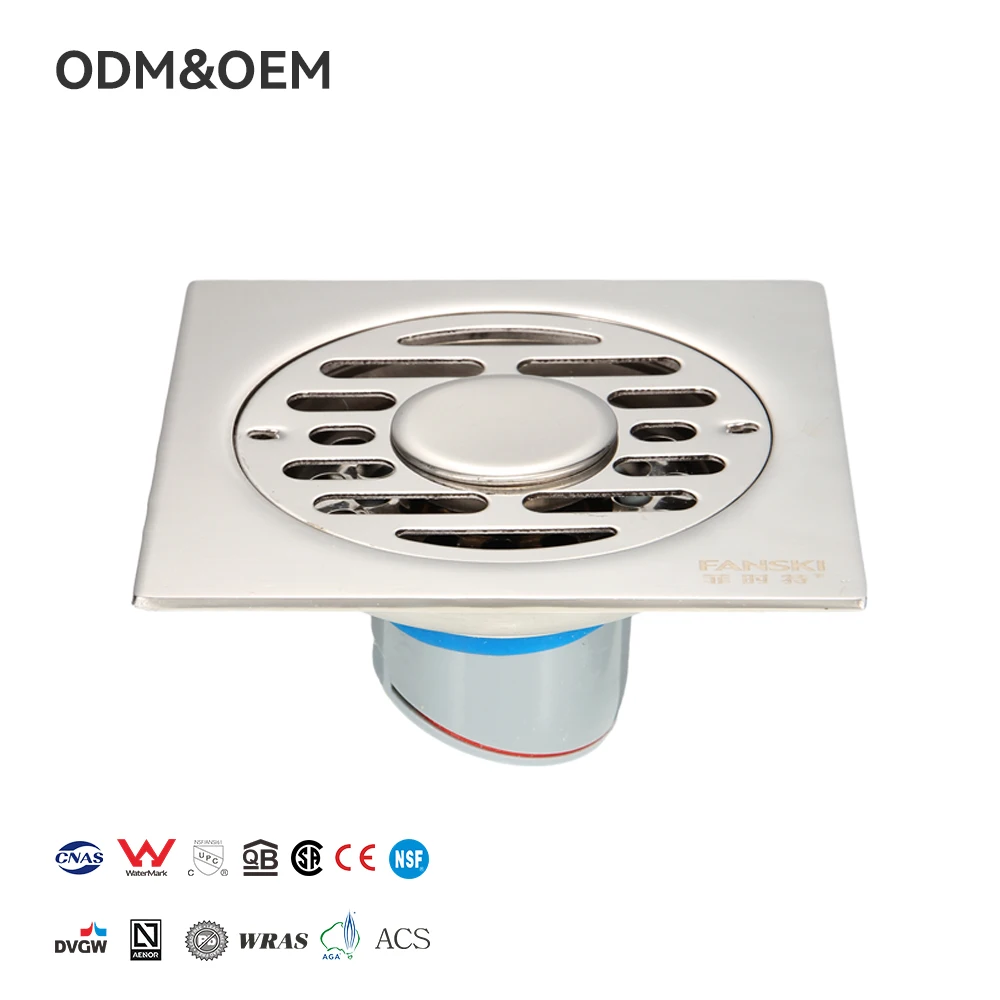
The grate or strainer cover of a floor drain significantly influences its capacity to prevent water accumulation. Modern floor drain designs feature expanded surface areas with multiple water entry points distributed across the grate, rather than concentrating water flow through a single center opening. This distributed entry approach reduces the velocity required for water to escape the floor surface, making the floor drain more efficient at handling rapid water discharge. High-flow floor drain grates often display geometric patterns, square configurations, or radial designs that optimize water capture while maintaining structural integrity.
The height and material composition of floor drain grates also matters considerably. Stainless steel floor drain covers resist corrosion in humid bathroom environments, maintaining their effectiveness over years of exposure to moisture. The grate height must align with adjacent floor finishes to prevent water from pooling around the edges rather than entering the floor drain. Misaligned or sunken floor drain installations frequently become ineffective at water accumulation prevention, as water redirects sideways instead of downward into the drain.
How High-Flow Floor Drain Design Prevents Water Pooling
Expanded Capacity and Water Volume Tolerance
High-flow floor drain systems are specifically engineered to handle substantially greater water volumes than standard drainage fixtures. These floor drain models feature larger diameter piping, increased strainer basket capacity, and optimized internal geometry that collectively support higher discharge rates. In commercial shower facilities, hotels, and industrial spaces where simultaneous multiple water sources converge, a floor drain with high-flow capability becomes essential to prevent water accumulation. Standard floor drain designs often fail under sustained heavy water loads, resulting in pooling that lingers for extended periods.
The relationship between floor drain pipe diameter and drainage capacity follows mathematical principles where slightly larger pipes accommodate exponentially greater water flow. A floor drain with a four-inch diameter pipe can discharge water far more effectively than a three-inch floor drain under identical conditions. Facility managers recognizing this principle increasingly specify larger floor drain systems for spaces expected to generate significant water volume, particularly shower areas, steam rooms, and spaces receiving regular washdown procedures. The investment in high-capacity floor drain infrastructure prevents costly water damage and maintains safer environments.
Anti-Clogging Features and Sustained Performance
Water accumulation frequently results not from insufficient floor drain capacity but from partial blockages that gradually impede flow. Hair, soap residue, mineral deposits, and other debris accumulate within the floor drain components, gradually reducing water passage velocity. Premium floor drain designs incorporate anti-clogging features including secondary debris traps, removable basket filters, and angled internal channels that encourage debris settlement while maintaining water flow. These architectural features within the floor drain structure allow technicians to access and clean blockages quickly without requiring excavation or pipe replacement.
Some high-performance floor drain systems include secondary straining stages, essentially creating a two-stage filtration process within a single floor drain fixture. The first stage of the floor drain captures large solids, while secondary straining prevents fine debris from progressing deeper into the piping system. This dual-stage approach to floor drain maintenance significantly extends the interval between cleaning cycles. Facilities using these advanced floor drain designs report reduced maintenance frequency and consistently better water accumulation prevention compared to single-stage floor drain alternatives.
Practical Installation and Maintenance Impact on Water Accumulation Prevention
Installation Best Practices for Floor Drain Effectiveness
Proper floor drain installation establishes the foundation for effective water accumulation prevention. The floor drain must be positioned at the lowest point of the space, with all flooring slopes directing water toward this central drainage point. During installation, the floor drain should be set slightly higher than the surrounding floor surface to prevent standing water from accumulating around the floor drain perimeter. The floor drain connection to underground piping must include appropriate venting to allow air displacement as water flows downward, preventing air locks that significantly reduce floor drain efficiency.
Selecting appropriate floor drain materials matters enormously for long-term performance. Stainless steel floor drain components resist corrosion far better than standard materials, maintaining their structural integrity and flow characteristics indefinitely. When floor drain installation occurs in spaces with harsh chemical exposure or aggressive washdown procedures, material selection becomes even more critical. Inferior floor drain materials degrade over time, losing their smooth internal surfaces and becoming increasingly prone to debris accumulation that causes water pooling.
Maintenance Schedules and Preventive Care
Even the best-designed high-flow floor drain requires regular maintenance to sustain its water accumulation prevention capabilities. Facility managers should establish routine cleaning schedules for floor drain components, typically quarterly or semi-annually depending on usage intensity. Regular floor drain maintenance prevents debris accumulation from progressively reducing flow capacity. Technicians should inspect the floor drain grate for damage, verify that surrounding floor slopes remain intact, and confirm proper drainage performance during test runs.
Proactive floor drain maintenance addressing minor issues prevents catastrophic failures that result in significant water accumulation and property damage. Small debris trapped within the floor drain strainer can be removed quickly during routine service visits, whereas allowing accumulation to progress results in complete floor drain blockage requiring emergency intervention. Facilities implementing preventive floor drain maintenance programs consistently report fewer water accumulation incidents and lower overall infrastructure repair costs. The investment in systematic floor drain care pays substantial dividends in operational reliability.
FAQ
Can a floor drain handle continuous high-volume water discharge without causing water accumulation?
Yes, properly designed high-flow floor drain systems can manage continuous heavy water volumes. The floor drain's capacity depends on its diameter, strainer design, and connection to appropriately sized underground piping. A floor drain sized for anticipated maximum flow rates, combined with good maintenance practices, effectively prevents water accumulation even during intensive use periods like commercial shower facilities or industrial washdown operations.
What factors most commonly cause a floor drain to fail at preventing water accumulation?
The most common floor drain performance failures result from inadequate floor slope toward the drain, debris blockage within the floor drain structure, or undersized floor drain capacity for the application. Improper floor drain installation where sloping is insufficient means water cannot reach the drain naturally. Accumulated hair and soap in the floor drain strainer progressively reduces flow capacity. Selecting a floor drain too small for the water volume generated in a space guarantees pooling during peak usage.
How often should floor drain maintenance occur to sustain water accumulation prevention?
Floor drain maintenance frequency depends on usage intensity and debris generation in the space. Residential floor drain systems typically require cleaning every six to twelve months. Commercial shower facilities and industrial spaces should implement quarterly floor drain inspections and cleaning. High-traffic facilities generating significant debris may benefit from monthly floor drain maintenance. Regular floor drain cleaning removes accumulated debris before it severely compromises flow capacity and prevents water pooling issues.