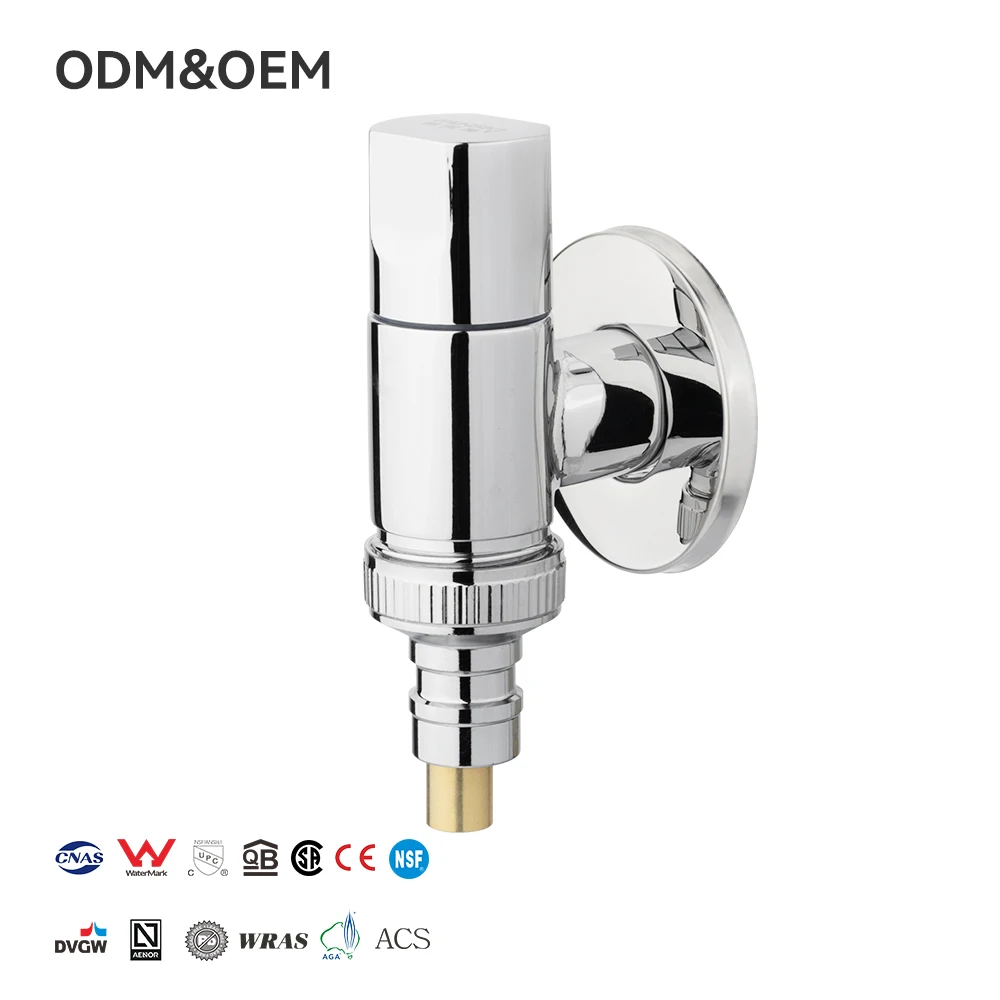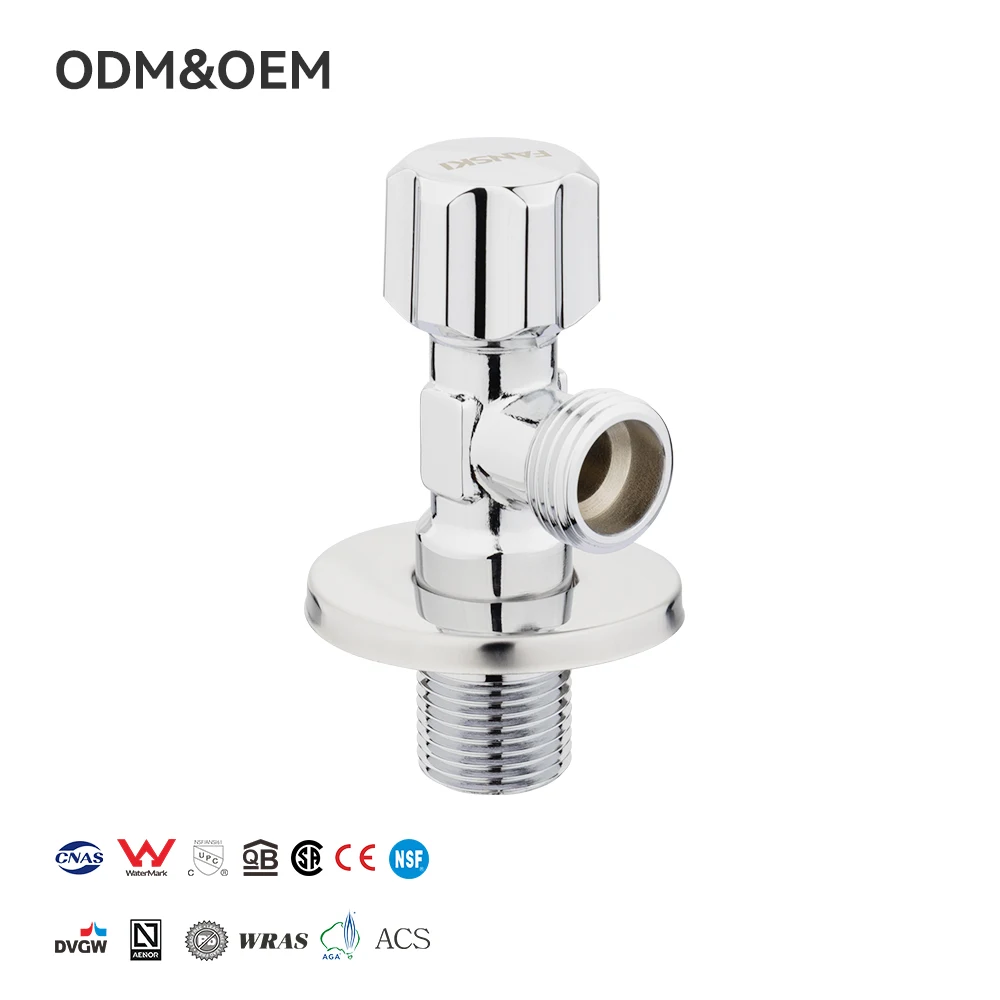
Stainless steel braided hoses are critical pressure-bearing components in kitchen and bathroom water supply systems. While products on the market often look nearly identical, significant differences exist in the raw materials and manufacturing processes used for their five core components: the inner insert (barbed insert), hex nut, SUS304 stainless steel braiding, rubber inner tube, and installation wrench.
These differences directly determine a hose's resistance to leakage and burst failure, service life, and compliance with international export standards.
Many overseas buyers focus primarily on unit price when sourcing braided hoses. Although low-cost products may appear to reduce procurement expenses, they often result in much higher hidden costs later, including water leakage claims, large-scale product returns, and customs clearance issues caused by non-compliant materials.
As one of Asia's leading manufacturers specializing in stainless steel braided hoses, FANSKI applies unified material standards across all core components. Every component is manufactured using virgin raw materials and undergoes batch-by-batch testing in our CNAS-accredited national laboratory.
This article compares FANSKI braided hoses with ordinary products available on the market from five critical perspectives:
Our goal is to help global importers, wholesalers, and engineering contractors look beyond the external appearance, identify hidden cost-cutting practices inside braided hoses, and make more informed purchasing decisions while minimizing long-term business risks.
The barbed insert located at both ends of a braided hose secures the inner tube and serves as the primary pressure-bearing structure that prevents water leakage under fluctuating water pressure.
During long-term operation under alternating hot and cold water as well as repeated pressure pulses, deformation or cracking of the inner insert is one of the most common causes of gradual joint leakage.
Many low-cost hoses use recycled brass, zinc alloy die-cast inserts, or even thin stamped brass components. These materials typically contain high levels of impurities and often suffer from internal defects such as porosity and air pockets.
The inserts are commonly produced through basic die-casting processes using simple molds. The barbed teeth are shallow, wall thickness is insufficient, and the structure is prone to deformation after crimping.
Under continuous pressure fluctuations, these inserts are susceptible to:
Additionally, the heavy metal leaching level is often too high to meet North American NSF standards or European drinking water regulations.
Most ordinary inserts cannot withstand one million pulse fatigue cycles required by UPC testing.
They are generally suitable only for short-term residential installations and are not recommended for commercial buildings, hotels, apartment projects, or other long-term engineering applications.
FANSKI uses high-purity, low-lead forged brass manufactured from virgin brass billets. No recycled metal is added during production.
Lead content fully complies with the requirements of the North American AB1953 Lead-Free Act.
Each insert is precision-machined using CNC lathes.
Compared with ordinary products, FANSKI inserts feature:
The one-piece forged structure offers excellent resistance to long-term pressure fluctuations.
Key benefits include:
FANSKI combines its precision-machined inserts with a fully automated CNC crimping process.
Accurate crimping force ensures a permanent and secure connection between the inner tube and the barbed insert, significantly reducing the risk of hose separation and long-term leakage.
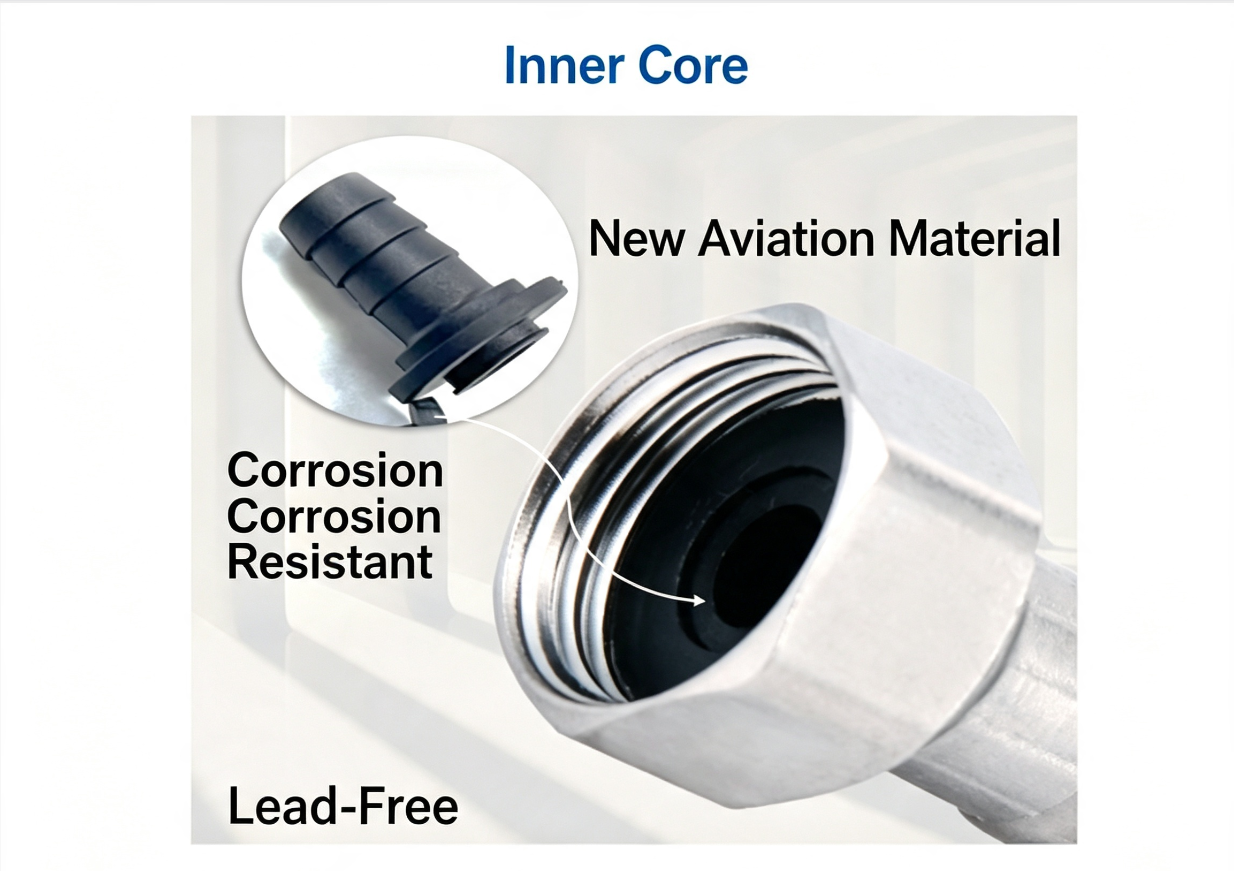
The hex nut is responsible for securing the hose connection during installation. Its material quality, thread precision, and structural strength directly affect sealing performance, installation efficiency, and long-term serviceability.
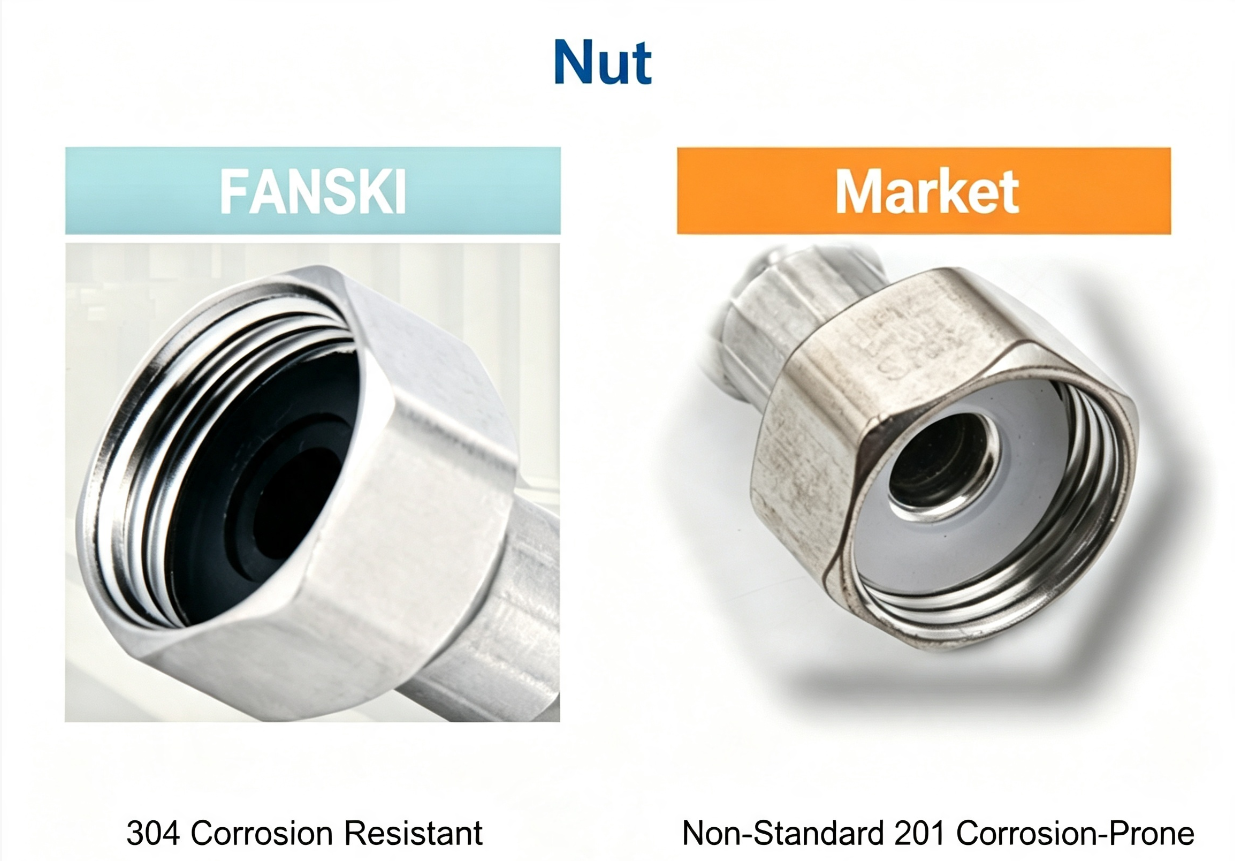
Many low-cost braided hoses use non-standard 201 stainless steel hex nuts as a cost-saving alternative.
Because of their lower nickel content, these nuts provide limited corrosion resistance and are not designed for demanding or long-term service conditions.
Most conventional products use basic thread rolling processes with relatively loose manufacturing tolerances. As a result, thread depth and pitch are often inconsistent, which may lead to:
Compared with SUS304 stainless steel, 201 stainless steel offers significantly lower resistance to corrosion in humid and salt-rich environments.
When exposed to coastal regions or high-humidity conditions, these nuts are more likely to develop:
As corrosion progresses, maintenance and disassembly become increasingly difficult.
Low-quality hex nuts may crack under normal installation torque and are generally unsuitable for long-term use in coastal, tropical, or other high-temperature and high-humidity environments.
FANSKI uses standard SUS304 austenitic stainless steel hex nuts manufactured with qualified nickel and chromium content to provide outstanding corrosion resistance and long-term durability.
Every FANSKI hex nut is precision-machined in accordance with internationally recognized thread standards, including:
This ensures:
FANSKI SUS304 hex nuts deliver excellent resistance to neutral salt spray corrosion and are suitable for demanding environments, including:
Even after prolonged service, they remain highly resistant to rust and thread seizure.
The standardized wall thickness provides excellent structural strength and minimizes the risk of cracking under normal installation torque.
For customers requiring premium corrosion resistance, FANSKI offers a complete all-stainless-steel solution by combining SUS304 hex nuts with premium EPDM braided hoses, delivering enhanced durability and long-term reliability in demanding applications.
The stainless steel braiding serves as the protective outer layer of a braided hose. The quality of the stainless steel wire, wire diameter, and braiding density directly determine the hose's burst resistance, corrosion resistance, and long-term fatigue performance.
This is also one of the most common areas where manufacturers reduce costs by using inferior materials or simplified construction.
Many conventional braided hoses substitute 201 stainless steel or even galvanized steel wire for genuine SUS304 stainless steel.
These lower-grade materials contain less nickel, making them far more susceptible to corrosion. In humid environments, rust can develop within a relatively short period of use.
To reduce manufacturing costs, some products feature:
These shortcuts significantly reduce the braiding's ability to restrain the expansion of the inner tube under water pressure.
Continuous pressure fluctuations gradually cause metal fatigue in low-quality braiding.
Over time, the stainless steel wires begin to break individually, weakening the protective layer. Once the braiding loses its structural integrity, the risk of inner tube rupture increases substantially.
In coastal or high-humidity environments, corrosion further accelerates deterioration and shortens the product's service life.
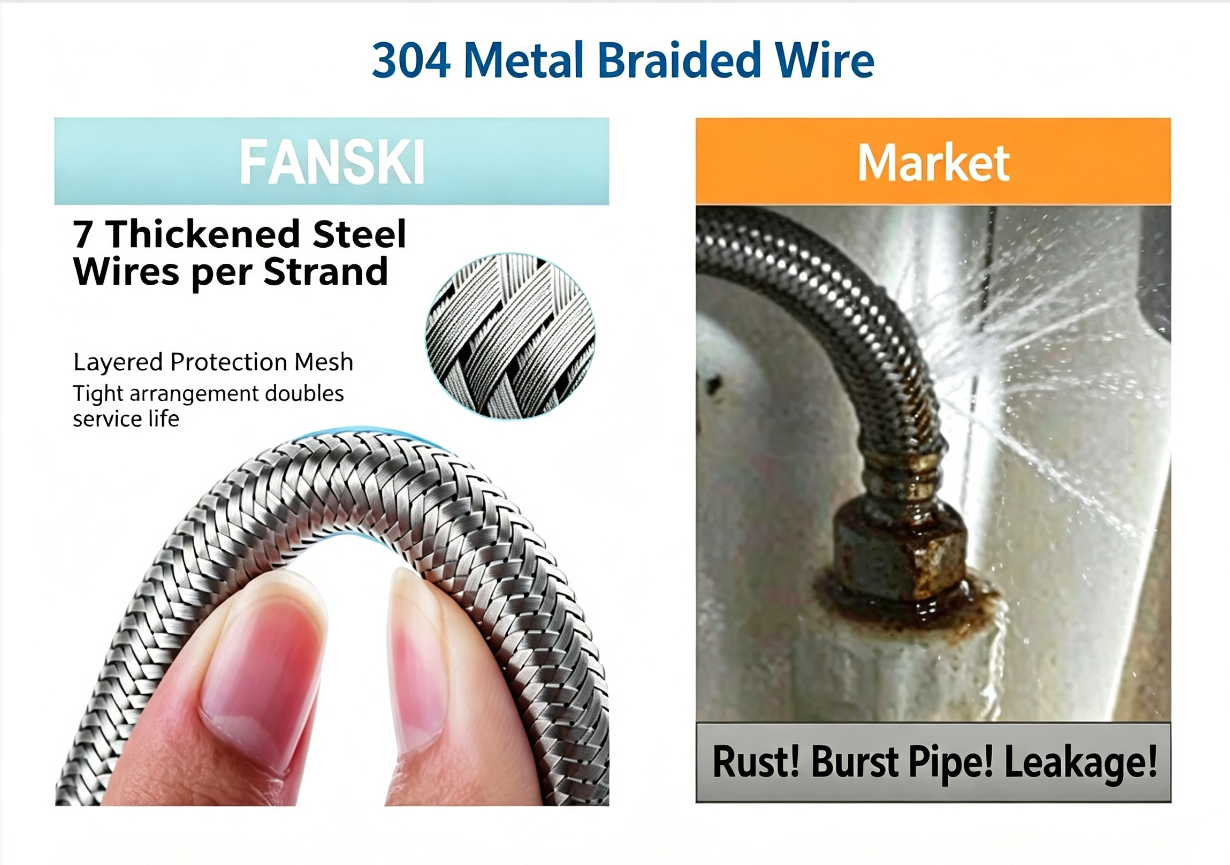
FANSKI uses genuine SUS304 austenitic stainless steel wire manufactured from virgin raw materials.
The stable chemical composition provides excellent corrosion resistance, making the braided hose suitable for a wide range of climates and operating environments around the world.
Every FANSKI braided hose is manufactured using:
The optimized braid structure distributes stress evenly and effectively restrains the expansion of the inner tube under high water pressure, improving both safety and long-term durability.
Through comprehensive laboratory testing, FANSKI braided hoses demonstrate outstanding mechanical performance, including:
These results contribute to consistent sealing performance and a significantly longer service life.
To ensure global supply consistency, FANSKI applies the same raw material standards, production processes, and quality control procedures across all manufacturing facilities.
Products manufactured at the Long An, Vietnam facility use the same SUS304 stainless steel braiding specifications as those produced in China, ensuring identical quality without material downgrades for overseas orders.
This section highlights one of the most critical differences between premium and low-cost braided hoses. While braided hoses may appear similar externally, the quality of the stainless steel braiding plays a decisive role in burst resistance, corrosion protection, and long-term reliability under demanding operating conditions.
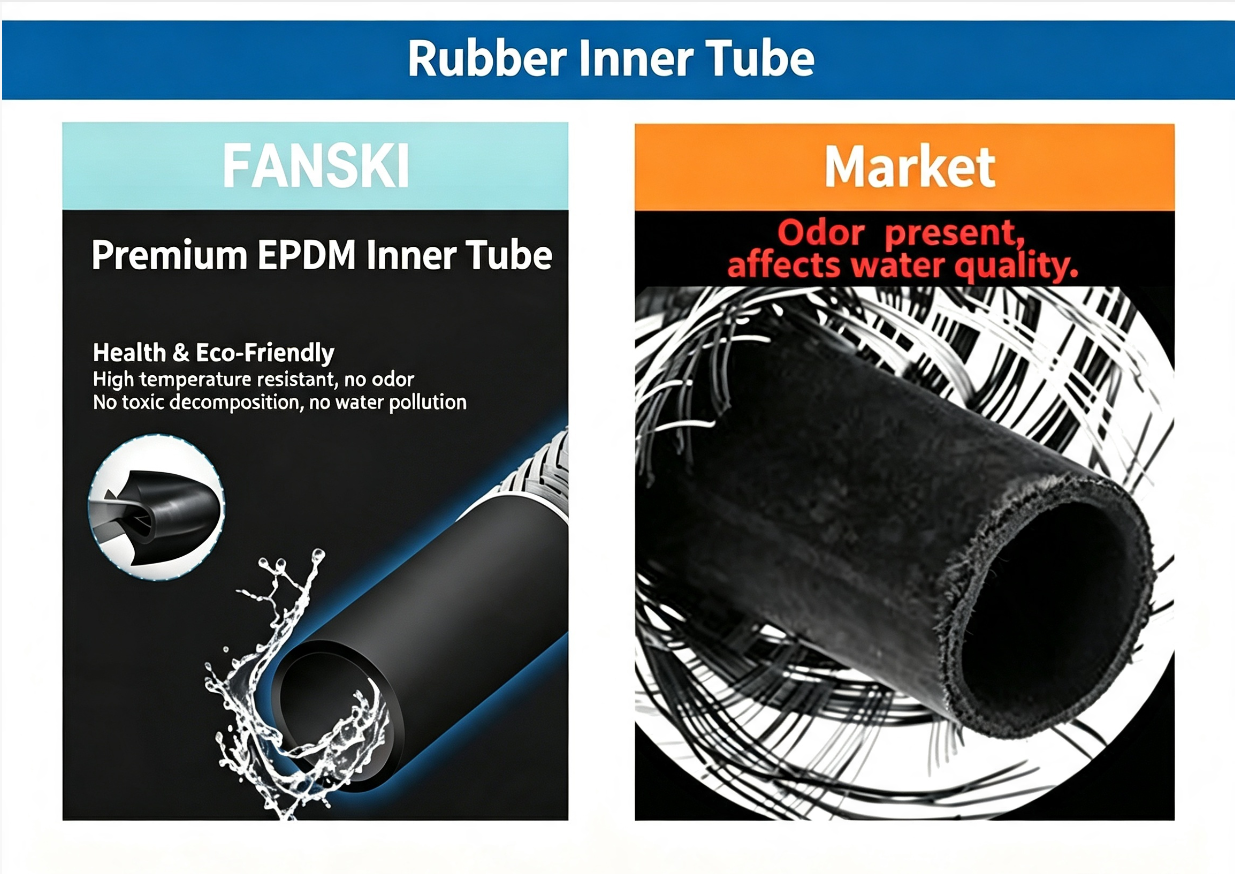
The inner tube is the only component that comes into direct contact with drinking water, making it the most critical part of a stainless steel braided hose. Its material quality determines water safety, temperature resistance, aging performance, and overall service life.
Inferior materials may not be visible from the outside, but they can significantly increase the risk of leakage, premature failure, and non-compliance with international drinking water standards.
Low-cost braided hoses typically use one of the following material configurations:
Option 1: Recycled Rubber
Some manufacturers use recycled or low-grade rubber compounds filled with reclaimed materials to reduce production costs. These materials often produce a strong odor and may continuously release harmful substances when exposed to hot water. As a result, they are generally unable to meet international drinking water certification requirements.
Option 2: Low-Quality Thin-Wall PEX
Another common approach is to use thin-wall PEX tubing without proper modification for thermal aging resistance. Under prolonged exposure to elevated temperatures, the material tends to harden, become brittle, and eventually crack.
Compared with premium materials, low-quality inner tubes typically offer:
These products are generally suitable only for basic cold-water residential applications.
Inferior inner tube materials often fail to meet international requirements for:
As a result, they may encounter certification failures, customs clearance delays, or restricted market access in regions with strict regulatory requirements.
To meet the requirements of different applications and markets, FANSKI offers two professionally engineered inner tube options.
Recommended for premium residential, commercial, and hot water systems
FANSKI's EPDM inner tube is manufactured using a virgin food-grade formulation without recycled materials or harmful plasticizers.
Key features include:
The material has successfully passed internationally recognized drinking water tests, including:
These certifications demonstrate excellent performance in chemical leaching control and microbiological safety.
An economical solution for standard cold water applications
FANSKI also offers a modified PEX inner tube manufactured from virgin raw materials.
Compared with conventional low-cost PEX tubing, it provides:
This option is designed to satisfy the export compliance requirements of mainstream international markets while offering an excellent balance between performance and cost.
Both EPDM and modified PEX inner tubes undergo comprehensive batch testing in the FANSKI CNAS-accredited laboratory.
Each production batch is subject to inspections including:
Complete inspection reports can be provided upon request, giving customers greater confidence in product quality, regulatory compliance, and long-term reliability.
Many suppliers focus solely on the braided hose itself while overlooking the importance of installation accessories. However, for plumbers, contractors, and distributors in overseas markets, installation convenience has a direct impact on user satisfaction, after-sales service, and repeat business.
Providing a practical and durable installation tool adds value to the overall product package and improves the end-user experience.
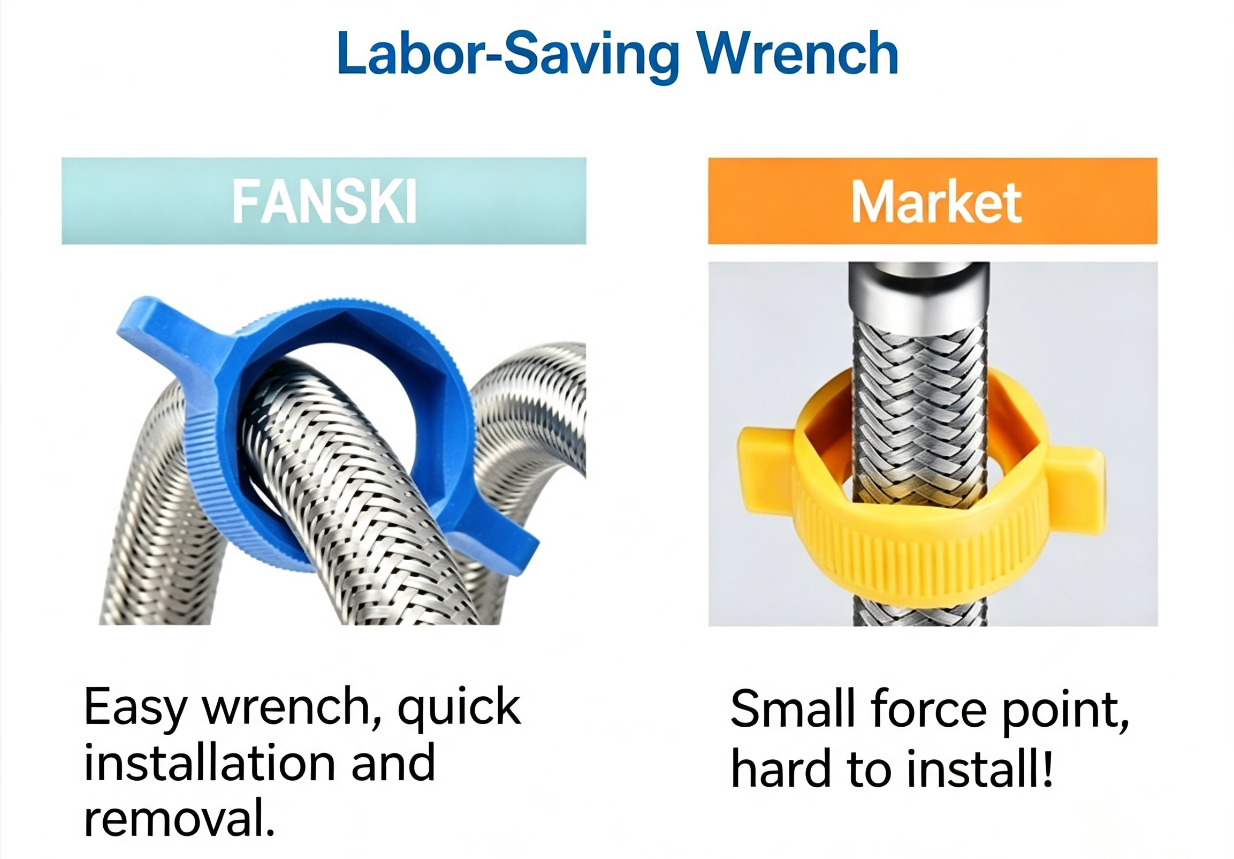
Many suppliers provide only a thin, low-strength plastic wrench.
These tools are prone to cracking or breaking under moderate torque and are generally suitable for only a single installation.
For many low-cost orders, no installation wrench is included at all.
As a result, importers must source compatible tools separately, increasing procurement complexity, packaging costs, and labor expenses.
Generic plastic wrenches are often manufactured with inconsistent dimensions that do not precisely match the hose hex nut.
This may cause:
FANSKI provides an installation wrench manufactured from high-toughness engineering plastic using an integrated molding process.
Compared with ordinary plastic tools, it offers:
Each wrench is specifically designed to match the dimensions of FANSKI SUS304 stainless steel hex nuts.
The precise fit provides:
FANSKI offers flexible packaging solutions based on customer requirements.
Customers may choose to:
This flexibility helps distributors better meet different market demands.
By supplying braided hoses and installation accessories together, FANSKI helps customers:
While high-quality components are essential, FANSKI goes further by delivering a complete quality assurance system that supports global customers throughout the entire supply chain.
FANSKI operates its own CNAS-accredited laboratory, where every production batch undergoes comprehensive testing, including:
Unlike manufacturers that rely solely on periodic third-party testing, FANSKI performs continuous in-house quality verification to ensure consistent product performance.
FANSKI products are supported by a wide range of internationally recognized certifications, including:
These certifications help customers meet regulatory requirements in major international markets while simplifying product approval and market entry.
All FANSKI braided hoses are covered by product liability insurance.
In the event of damage caused by verified product quality defects, customers benefit from an additional level of protection beyond the standard product warranty, reducing potential business risks for importers and distributors.
FANSKI maintains identical production standards across both its China and Vietnam manufacturing facilities.
Both factories use:
This ensures consistent product quality regardless of manufacturing location while providing customers with greater flexibility in global sourcing.
When sourcing stainless steel braided hoses, focusing solely on the purchase price can lead to significantly higher long-term costs.
Inferior components may result in corrosion, leakage, burst failures, product recalls, customs clearance issues, and expensive after-sales claims—costs that often far exceed the initial savings achieved through low-priced procurement.
For standard residential cold-water applications, a modified PEX configuration provides an economical and reliable solution.
For commercial projects, hotels, premium residential developments, hot water systems, and engineering applications in North America, Europe, and other high-standard markets, a configuration featuring a food-grade EPDM inner tube combined with SUS304 stainless steel precision components offers superior long-term reliability and performance.
At FANSKI, every core component is fully traceable to its source. We use only virgin raw materials, maintain an integrated in-house manufacturing system, and implement rigorous quality control throughout the entire production process. Backed by internationally recognized certifications and comprehensive testing, FANSKI provides global importers, distributors, and project contractors with reliable stainless steel braided hose solutions designed for long-term performance, regulatory compliance, and reduced after-sales risk.
 Hot News
2026-09-28
2026-07-23
2026-07-16
2026-07-08
2026-07-01
2026-06-25
 EN
EN